
-
High-frequency measurement system services Material testing Probe station Microwave anechoic chamber/shielded roomLan Cable Fully Automatic Tester Auto Switch fully automatic testing machine USB 4 / Type-C finished product line test system DisplayPort 2.1 finished product line test system HDMI 2.1 finished product line test system MCIO finished product line testing system Gen-Z finished product line testing system PCIE finished product line test system OCuLink Finished Product Line Test System QSFP/SFP finished product line test system HSD finished product line test system FAKRA finished product line testing system SAS/MiniSAS/SlimSAS Finished Product Line Testing System Raw Cable 20G/40G/50G Bare Wire Test System SATA/eSATA finished product line test system LVDS finished product line testing system Pre-test Integration ProjectElectromagnetic shielding test system Material electromagnetic parameter testing system Resistivity testing system Cable Shielding Effectiveness Test System Conductive gasket shielding effectiveness test system Reflection rate test system for absorbing materials NSS Noise Suppression/Absorption Sheet Performance Evaluation System Pre-compatibility testing systemUltra-low temperature vacuum probe station Automated probe station Manual probe station Displacement platform



Mastering the Oscilloscope: A User-Friendly Guide to Operation and Application
Category: Blog
Release time: 2025-04-30
The Allure of the Oscilloscope
Hi, everyone! Today, let's talk about an extremely important tool in electronic engineering and physics experiments—the oscilloscope. Do you often see others using oscilloscopes to measure signals in the lab, but find it complex and difficult to understand? Don't worry, let's delve into how to use an oscilloscope, easily get started, and master this amazing device!
Basic Structure of an Oscilloscope
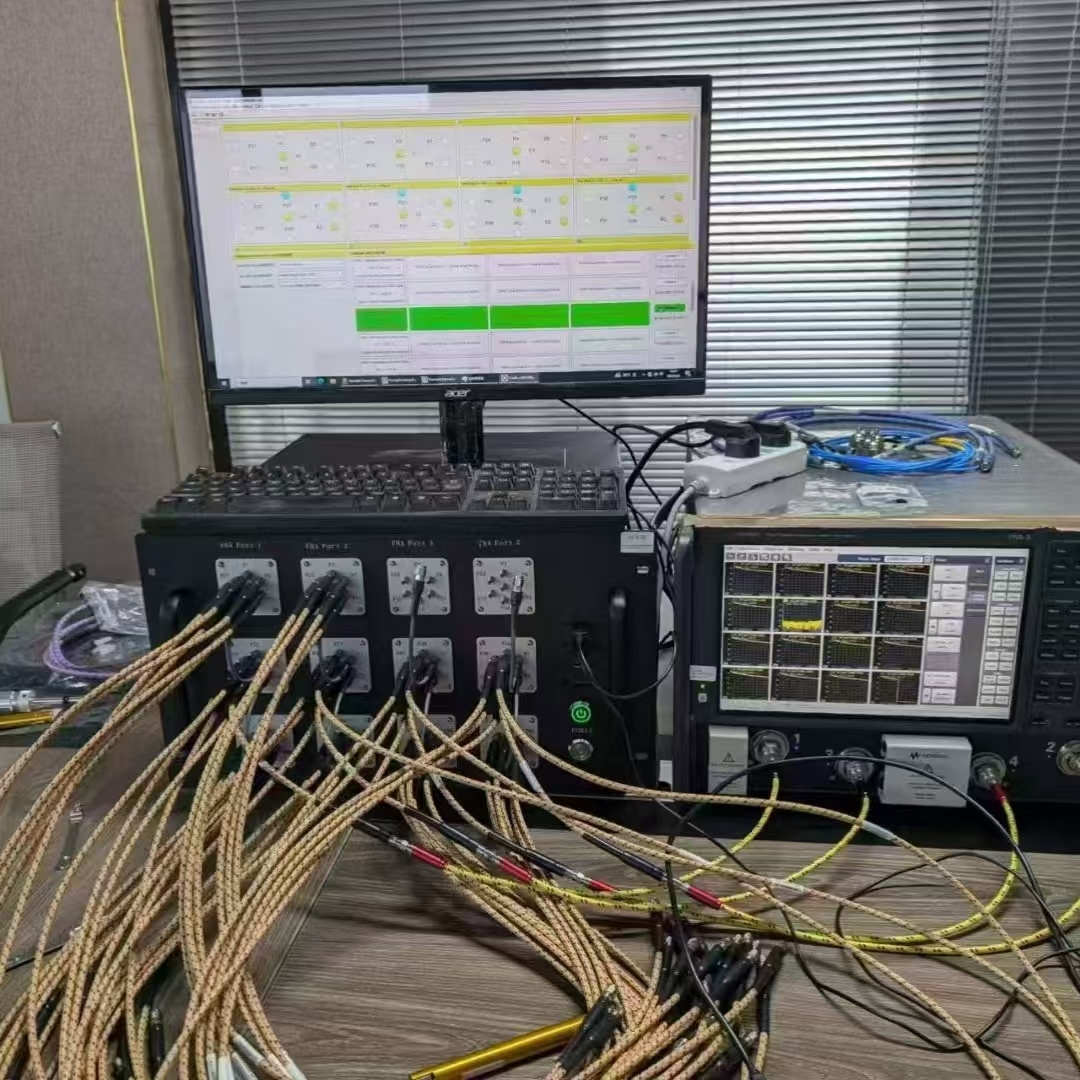
Before learning how to use an oscilloscope, we must first understand its basic structure. An oscilloscope mainly consists of a display screen, input channels, a control panel, and a probe. The display screen shows the signal waveform, while the input channels are where the signal source is connected. The control panel has various buttons and knobs for adjusting the display content and measurement parameters.
How to Connect an Oscilloscope
Connecting an oscilloscope is actually not complicated. First, you need to choose the appropriate probe. In most cases, 1X and 10X probes are the most commonly used, with the 10X probe effectively reducing the signal load. When connecting the probe, ensure that the probe's ground clip is connected to the ground wire of the circuit under test to avoid noise interference.
Adjusting Oscilloscope Settings
Once you have connected the probe, it's time to adjust the oscilloscope settings. First, adjust the vertical and horizontal scales so that the waveform is clearly visible on the display screen. Then, use the trigger function to ensure the waveform is stable. The trigger setting is like a "shutter," helping you capture the signal you want.
Common Functions of an Oscilloscope
Oh, oscilloscopes can do more than just display waveforms! It has many powerful functions. For example, measuring parameters such as frequency, period, and amplitude. You only need to move the cursor to the waveform to quickly obtain this information. In addition, many modern oscilloscopes also support waveform storage and data analysis, making it easier for you to conduct more in-depth research.
Application Scenarios of an Oscilloscope
Speaking of applications, the oscilloscope has a wide range of uses! From simple circuit troubleshooting to complex signal analysis, the oscilloscope can be used. For example, in the debugging of audio equipment, engineers can observe the waveform of the audio signal through the oscilloscope to judge the performance of the equipment. In the field of scientific research, the oscilloscope is an indispensable tool, helping scientists conduct various experiments and data acquisition.
Tips and Precautions
When using an oscilloscope, there are a few tips that can help you operate better. First, ensure that the probe is well grounded to prevent noise interference. Second, avoid connecting the oscilloscope to high-voltage circuits to prevent damage to the equipment. Finally, calibrate the oscilloscope regularly to ensure measurement accuracy.
Summary
In short, using an oscilloscope is not as complicated as you might think. As long as you master the basic connection and setting skills, you can easily get started. As you gain experience, you will find that the powerful functions of the oscilloscope will bring great convenience to your work and research. Try it out and start your oscilloscope journey!
Key word: Mastering the Oscilloscope: A User-Friendly Guide to Operation and Application
Next Page
Next Page
Related Information

Unveiling the Mystery of Anli: Understanding its Working Principles
Understand the working principle of Anli and explore its applications and impact in modern technology.
2025/05/22

Anly's precautions: Make your life easier
Explore precautions for Anli to make your life smoother and avoid unnecessary trouble.
2025/05/21
Contact Information
Add.: 2nd Floor, Building C, Zhongzhi Zhichuang Park, Yucui Community, Longhua Street, Longhua District, Shenzhen City, Guangdong Province, China
Tel: +86-135 1042 6680
Email: harriosn@sengt.com
Follow us

Follow us