
-
High-frequency measurement system services Material testing Probe station Microwave anechoic chamber/shielded roomLan Cable Fully Automatic Tester Auto Switch fully automatic testing machine USB 4 / Type-C finished product line test system DisplayPort 2.1 finished product line test system HDMI 2.1 finished product line test system MCIO finished product line testing system Gen-Z finished product line testing system PCIE finished product line test system OCuLink Finished Product Line Test System QSFP/SFP finished product line test system HSD finished product line test system FAKRA finished product line testing system SAS/MiniSAS/SlimSAS Finished Product Line Testing System Raw Cable 20G/40G/50G Bare Wire Test System SATA/eSATA finished product line test system LVDS finished product line testing system Pre-test Integration ProjectElectromagnetic shielding test system Material electromagnetic parameter testing system Resistivity testing system Cable Shielding Effectiveness Test System Conductive gasket shielding effectiveness test system Reflection rate test system for absorbing materials NSS Noise Suppression/Absorption Sheet Performance Evaluation System Pre-compatibility testing systemUltra-low temperature vacuum probe station Automated probe station Manual probe station Displacement platform
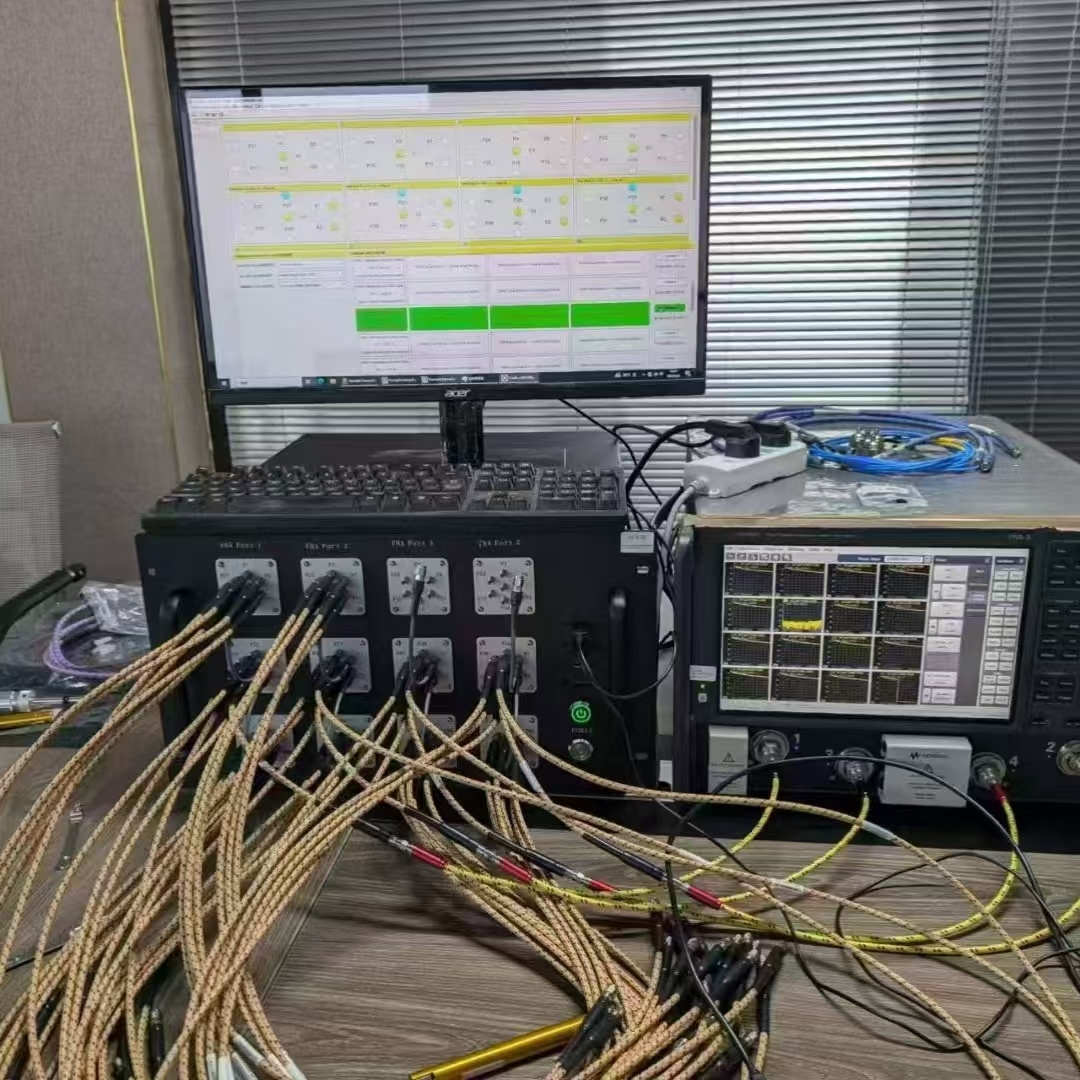



What is the function of an oscilloscope?
Category: Industry News
Release time: 2025-03-05
As an important electronic measuring instrument, oscilloscopes are widely used in various fields. They can visually display the waveform of electrical signals, helping engineers, researchers, and technicians analyze and understand the operating status of circuits.
Basic Principles of Oscilloscopes
An oscilloscope is an instrument used to measure and display how voltage changes over time. It amplifies weak electrical signals and displays them on a screen, allowing users to observe the waveform of the electrical signal. Oscilloscopes mainly consist of an amplifier, a display, and signal processing circuits. The amplifier amplifies the signal, the display shows the waveform, and the signal processing circuits process the signal as needed.
Main Functions of Oscilloscopes
1. Waveform Display: The most basic function of an oscilloscope is to display the waveform of an electrical signal. Through the oscilloscope's display screen, users can visually see the changes in the electrical signal and understand the operating status of the circuit.
2. Frequency Analysis: Using an oscilloscope, we can observe the frequency characteristics of an electrical signal. This is very important for analyzing and solving frequency problems in circuits.
3. Noise Testing: In circuit design, noise is an important consideration. An oscilloscope can help us measure and analyze noise in circuits, thereby optimizing circuit design.
4. Fault Diagnosis: When a circuit malfunctions, observing waveform changes with an oscilloscope can help engineers quickly find the cause of the malfunction and repair it.
5. Parameter Measurement: Oscilloscopes can measure parameters such as voltage, current, and frequency, providing accurate data for circuit design, debugging, and testing.
Examples of Oscilloscope Applications
1. Communications Field: In communication systems, oscilloscopes are used to analyze and test various electrical signals. In digital communications, oscilloscopes can help engineers observe the transmission quality of digital signals, thereby optimizing communication system performance.
2. Electronic Product Development: In the electronic product development process, oscilloscopes are used to test circuit performance. By observing waveforms, engineers can understand the operating status of the circuit and make necessary adjustments and optimizations.
3. Automotive Electronics: In the automotive industry, oscilloscopes are used to test and diagnose various electronic systems. By observing the waveforms of the engine control unit, the operating status of the engine can be determined, allowing for fault diagnosis and repair.
4. Aerospace: In the aerospace field, the importance of oscilloscopes is self-evident. They are used to test and verify the electronic systems of aircraft and spacecraft, ensuring that they can function properly in extreme environments.
Characteristics and Applications of Different Types of Oscilloscopes
1. Analog Oscilloscopes: Analog oscilloscopes have a high frequency response and bandwidth, suitable for measuring high-speed signals. They are suitable for communications, electronic development, and fault diagnosis.
2. Digital Oscilloscopes: Digital oscilloscopes are characterized by high accuracy, high resolution, and stability, suitable for laboratory and research fields. They can provide detailed waveform data and parameter measurements, helping engineers conduct more in-depth analysis.
3. Handheld Oscilloscopes: Handheld oscilloscopes are portable and easy to use, suitable for field testing and fault diagnosis. They allow for quick circuit testing and analysis without fixed laboratory equipment.
Precautions for Using Oscilloscopes
1. Correctly Connect the Circuit Under Test: When using an oscilloscope, it is necessary to correctly connect the circuit under test to avoid problems such as short circuits or open circuits.
2. Select Appropriate Probes and Accessories: Based on the characteristics of the signal being measured, select appropriate probes and accessories to ensure the accuracy of the measurement results.
3. Adjust Parameters: When using an oscilloscope, it is necessary to adjust parameters such as sensitivity and time base according to the characteristics of the signal being measured.
4. Maintenance: Regularly clean and maintain the oscilloscope to ensure its performance and accuracy.
Oscilloscopes have wide applications in the field of electronic measurement. Through this introduction, we have learned about the basic principles, functions, application examples, and precautions for using oscilloscopes. In practical applications, we need to select the appropriate oscilloscope type based on specific needs and correctly use and maintain the instrument to ensure the accuracy of the measurement results.
Key word: What is the function of an oscilloscope?
Next Page
Next Page
Related Information

Unveiling the Mystery of Anli: Understanding its Working Principles
Understand the working principle of Anli and explore its applications and impact in modern technology.
2025/05/22

Anly's precautions: Make your life easier
Explore precautions for Anli to make your life smoother and avoid unnecessary trouble.
2025/05/21
Contact Information
Add.: 2nd Floor, Building C, Zhongzhi Zhichuang Park, Yucui Community, Longhua Street, Longhua District, Shenzhen City, Guangdong Province, China
Tel: +86-135 1042 6680
Email: harriosn@sengt.com
Follow us

Follow us